Traditional Dance at the heart of Intangible Cultural Heritage
The UK Government’s ratification of the UNESCO 2003 Convention for Safeguarding Intangible Cultural Heritage (ICH) on 7 March 2024, marked a significant moment for Scotland’s living heritage. ICH refers to the practices, expressions, knowledge and skills that communities recognise as part of their cultural heritage—transmitted from generation to generation and constantly recreated in response to their environment and history.
Traditional dance sits at the heart of this definition—whether Scottish Highland, Country, Ceilidh or the many dance forms brought to these shores from around the world. Traditional dance is living heritage: it exists in the bodies, memories and shared practice of communities, passed down and constantly renewed. Traditional dance is not a monument to be preserved on a pedestal, but a living practice that exists only when it is danced, taught, learned and shared. The Convention’s safeguarding measures—identification, documentation, research, promotion, transmission and revitalisation—are therefore not about freezing dance traditions in time, but about ensuring their continued viability and evolution within contemporary communities.
Since its foundation in 2012, the Traditional Dance Forum of Scotland has been at the forefront of celebrating, revitalising and safeguarding the diversity of traditional dance practised across the country. From our annual Pomegranates Festival which revolves around the UNESCO International Day of Dance (29 April) to our year-round programme, all our activities are designed to safeguard age-old dance traditions and ensure they thrive in the contemporary, diverse Scotland we all call home.
To mark the convention officially entering into force for the UK on 7 June 2024, we curated our fourth Pomegranates Festival edition (25–30 April 2025) around the theme of traditional dance and intangible cultural heritage. We convened Scotland’s first Traditional Dance as ICH symposium on 28 April 2025, where for the first time we publicly discussed and highlighted the new opportunities for Scotland’s traditional dance sector in the context of the convention. We pledged to keep up the conversation and ensure that the Traditional Dance Forum of Scotland continues to provide a regular platform for traditional dance as living heritage.
17 October 2026: Celebrating the International Day of the Intangible Cultural Heritage
To mark the third annual edition in 2026 of the UNESCO International Day of the Intangible Cultural Heritage (17 October), we have launched our growing list of resources, events and activities across Scotland and beyond, dedicated to the diversity and richness of traditional dance as living heritage.
Share your ideas and queries about traditional dance as Intangible Cultural Heritage—we will be delighted to explore them further with you. Contact us at info@tdfs.org now.
Better still, register now and become a member of the Traditional Dance Forum of Scotland to ensure you can influence the traditional dance as Intangible Cultural Heritage national conversation.
Follow the evolving timeline of traditional dance as Intangible Cultural Heritage events, activities and resources below in chronological order.
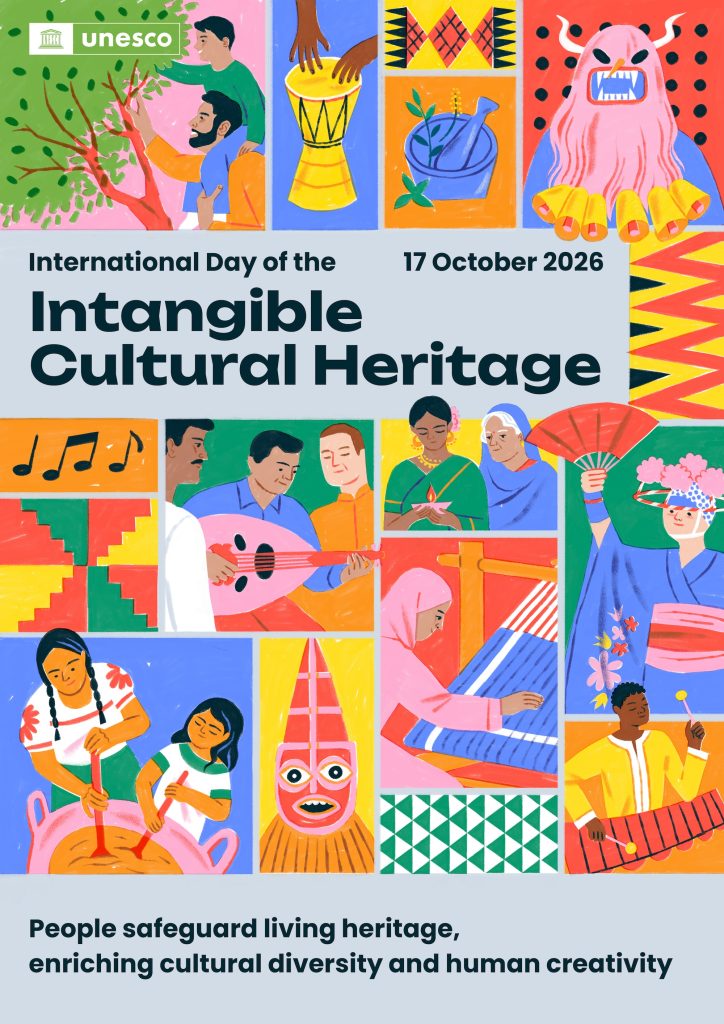
UNESCO International Day of the Intangible Cultural Heritage 2026 poster
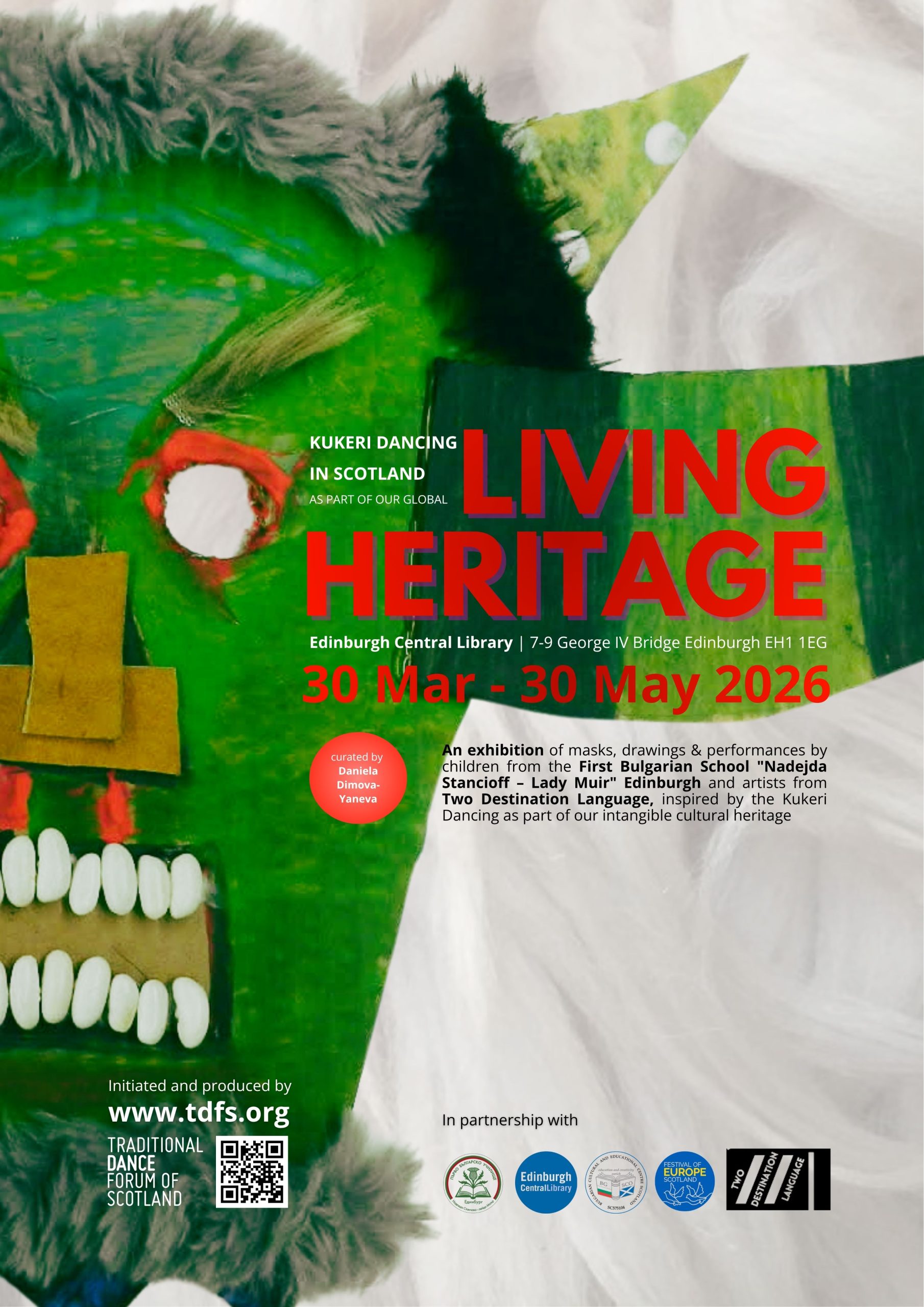
Browse through the 8-page exhibition booklet with further details and links about the featured masks, drawings and performances.
Kukeri Dancing in Scotland as part of our Global Living Heritage
Living Heritage Exhibition
30 March – 30 May 2026
Edinburgh Central Library
As part of Festival of Europe Scotland 2026
Our exhibition series, which started in 2023 as part of the Pomegranates Festival, brings the conversation about traditional dance as Intangible Cultural Heritage into public view – free and open to all – and highlights the new opportunities for Scotland’s traditional dance practitioners and participants following the UK Government ratification of the UNESCO Convention for Safeguarding Intangible Cultural Heritage.
Kukeri Dancing in Scotland as part of our Global Living Heritage was an exhibition of masks, drawings and performances by children from the First Bulgarian School “Nadejda Stancioff – Lady Muir” Edinburgh and artists from Scotland’s Two Destination Language, inspired by the Kukeri Dancing as part of our global Intangible Cultural Heritage.
Kukeri is a centuries-old Bulgarian tradition intended to dance away the evil spirits and welcome the arrival of spring. Once a year, Kukeri don scary masks, dress up in furs and dance into the night, armed with huge bells around their waists. In 2015 Kukeri was inscribed in the UNESCO Representative List of Intangible Cultural Heritage of Humanity. Safeguarding Scotland’s diverse dance traditions as part of our global living heritage, including those brought to our shores from as far as the lands of Kukeri, is at the heart of what we at Traditional Dance Forum of Scotland do.
Curated by Daniela Dimova YanevaI and Iliyana Nedkova | Initiated and produced by the Traditional Dance Forum of Scotland | Supported by Bulgarian Cultural and Educational Centre Scotland and team | First Bulgarian School Nadejda Stancioff – Lady Muir, Edinburgh and team | Cecylia O’May and the team of the Edinburgh Central Library | Katherina Radeva and the team of Two Destination Language | Clare Scanlan and the Festival of Europe Scotland team
Kukeri? Hop on the New Yorker YouTube channel to watch the documentary How a Bulgarian Village Dances Evil Spirits Away (2023, Dir. Killian Lassablière, 9 minutes).
Intrigued about the Kukeri’s inscription in the UNESCO Representative List of Intangible Cultural Heritage of Humanity as part of the Surova Folk Feast in Pernik Region of Bulgaria?
Scottish Country Dancing as part of our Global Living Heritage
Living Heritage Exhibition
2 March – 30 April 2026
Edinburgh Central Library
As part of Women’s History Month 2026
Our exhibition series, which started in 2023 as part of the Pomegranates Festival, brings the conversation about traditional dance as Intangible Cultural Heritage into public view – free and open to all – and highlights the new opportunities for Scotland’s traditional dance practitioners and participants following the UK Government ratification of the UNESCO Convention for Safeguarding Intangible Cultural Heritage.
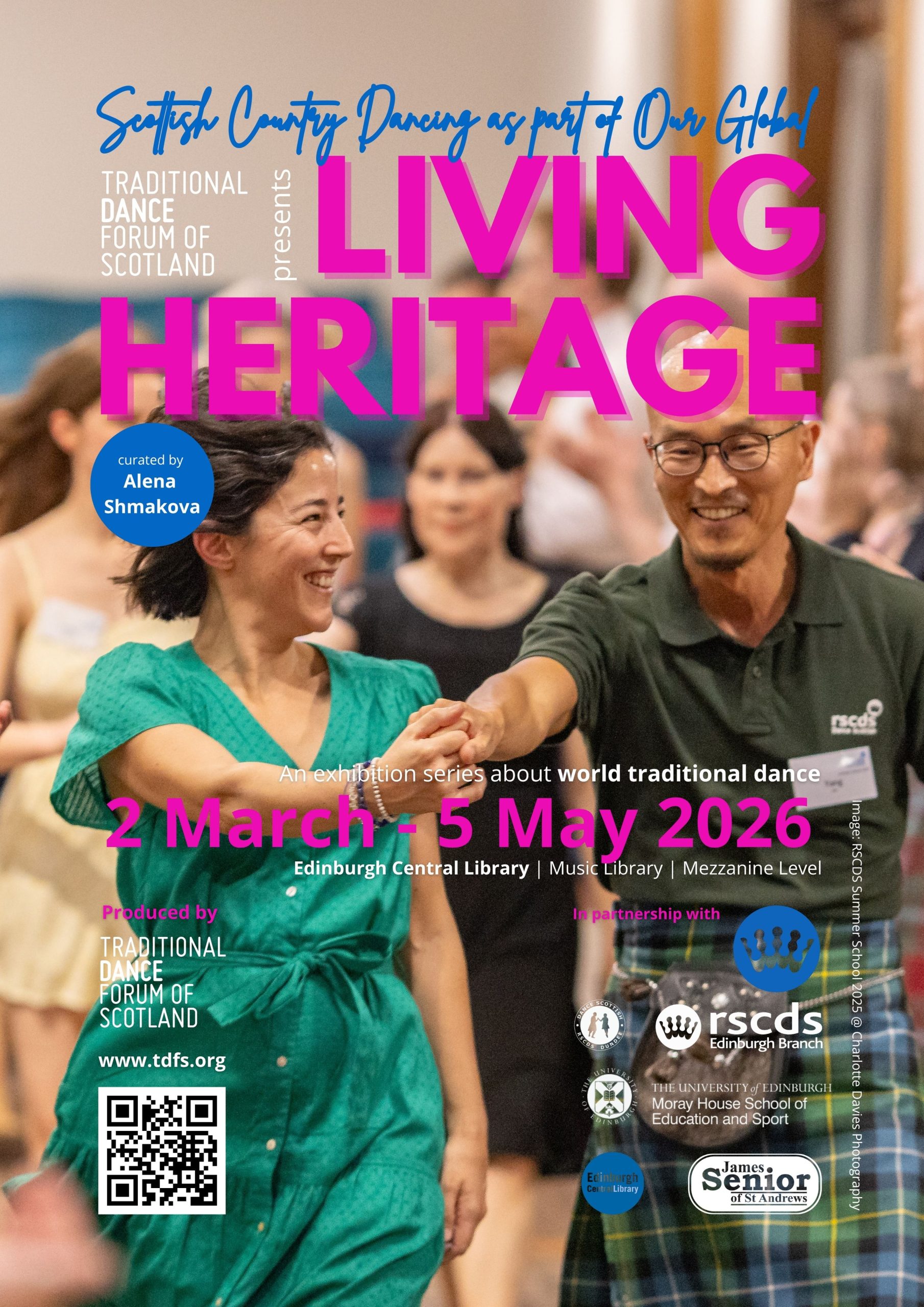
Scottish Country Dancing as part of our Global Living Heritage was the focus of our first exhibition in 2026 highlighting the intrinsic link between books, traditional dance and Intangible Cultural Heritage. It was specifically curated for the Edinburgh Central Library exhibition space and ran between 2 March and 5 May 2026.
Celebrating women’s history with Living Heritage – an exhibition at Central Library until 30 April 2026, curated by the Traditional Dance Forum Scotland in partnership with the Royal Scottish Country Dance Society
by Alena Shmakova
Curated by Alena Shmakova and Iliyana Nedkova. Initiated and produced by the Traditional Dance Forum of Scotland in partnership with Edinburgh Central Library, Royal Scottish Country Dance Society (RSCDS), RSCDS Edinburgh and Dundee branches, Moray House School of Education and Sport, University of Edinburgh, House of Edgar and James Senior of St Andrews.
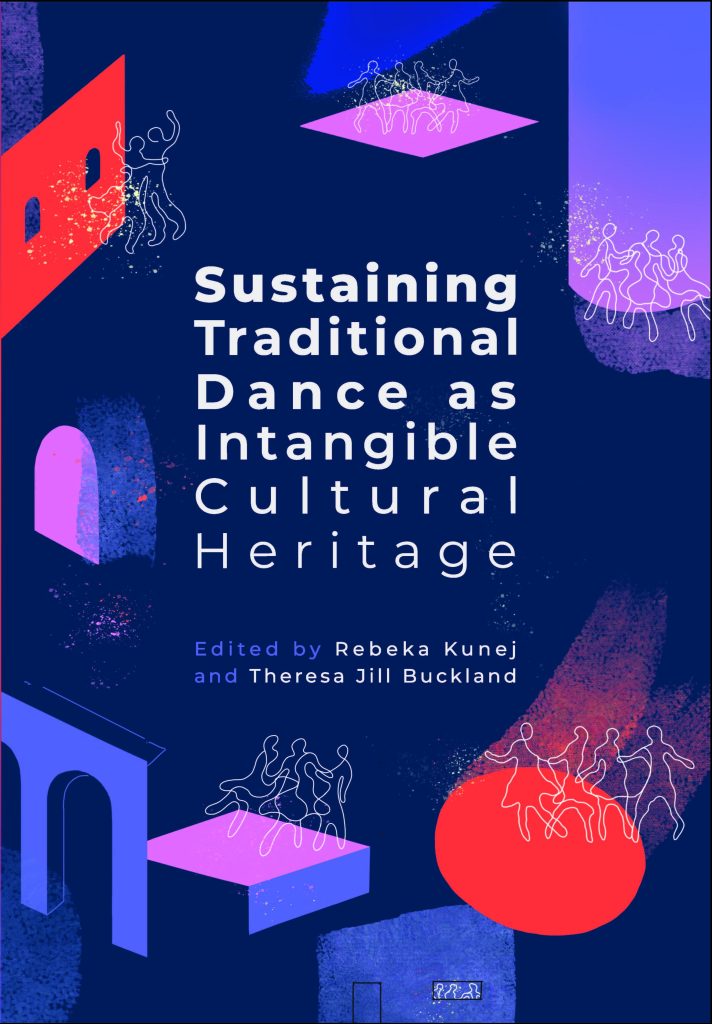
Browse through the monograph Sustaining Traditional Dance as Intangible Cultural Heritage (Založba ZRC, Ljubljana, 2025) featuring the conference case studies from Belgium, Greece, Hungary, Norway, Romania and Slovenia.
Download the handbook with 8 step-by-step guidelines for collaboration between cultural workers in heritage institutions and members of traditional dance communities.
How Sustainable Is Dance as Intangible Cultural Heritage?
International Conference
20 – 23 May 2025
The Research Centre of the Slovenian Academy of Sciences and Arts, Ljubljana
As part of the Creative Europe project Dance ICH
Traditional Dance Forum of Scotland attended the closing conference of the Creative Europe project Dance ICH, co-funded by the European Union. Dance ICH brought together 9 partner organisations from 6 countries Belgium, Greece, Hungary, Norway, Romania and Slovenia.over 4 years 2022-2025. The project applied ethnochoreological and ethnographic methods to research case studies of dance as intangible cultural heritage, trace new models and tools for facilitating participatory dance events and implement the ground-up approach of the UNESCO 2003 Convention for Safeguarding Intangible Cultural Heritage.
Download the conference programme booklet
Read the conference opening speech of Tone Erlien Myrvold, Dance ICH Project Leader.
Watch this special brief interview with some of the conference speakers and attendees.
Check our brief Facebook report with key moments from the conference.
Read the review of the conference and the presentations by Iliyana Nedkova and Wendy Timmons.
Intangible Cultural Heritage and Contemporary (Dance) Performance
International Symposium
11 May 2025
Tramway, Glasgow
As part of Dance International Glasgow 2025
Hosted by Galway Dance, this one-day international symposium explored the relationship between Intangible Cultural Heritage and contemporary (dance) performance. It featured Iliyana Nedkova of the Traditional Dance Forum of Scotland as the guest speaker, who focused on the opportunities for dance artists and practitioners in the context of the UNESCO 2003 Convention for Safeguarding Intangible Cultural Heritage and the Pomegranates Festival. This symposium was part of the International Residency Initiative Scheme with sharings of works in progress by the participating artists Rob Heaslip, Bernadette Divilly, Jack Anderson, Fionnlagh Mac A’ Phiocair and Aneta Dortová.
Find out more about DIG 2025: Moving Meitheal – Galway Dance Symposium (Scotland/Ireland)
Check this short Instagram clip with key moments of the symposium.

Read Catherine Coutts‘s review about this first public discussion on trad dance as living heritage in Scotland.
Traditional Dance as Intangible Cultural Heritage
International Symposium
28 April 2025
Scottish Storytelling Centre, Edinburgh
as part of Pomegranates Festival 2025
Hosted by the Traditional Dance Forum of Scotland and curated as part of the Pomegranates Festival 2025, this was the first public event exploring the opportunities for Scottish traditional dance in the context of the UNESCO 2003 Convention for Safeguarding Intangible Cultural Heritage.
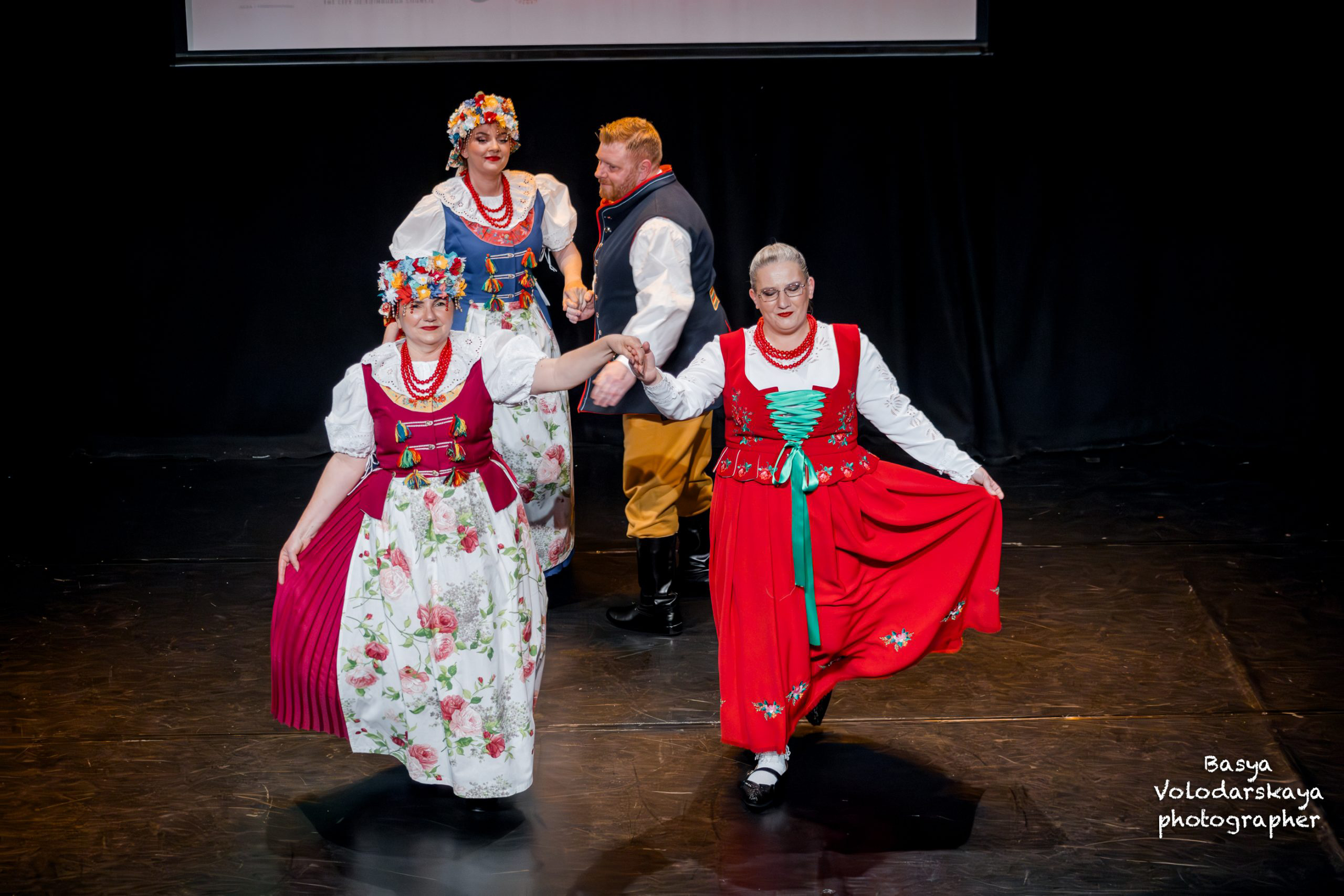
It started with display sets of Scottish Highland, Scottish Country Dance and Polish Polonaise. Three presentations followed, including Rachel Hosker of the Centre for Research Collections, University of Edinburgh and Árpád Vörös, recipient of the knighthood award for lifetime contribution towards Hungarian folk dance. It culminated in a discussion chaired by Wendy Timmons of the Traditional Dance Forum of Scotland.
Find out more about the programme of Scotland’s first Trad Dance as ICH gathering.
Browse and download the programme notes for Trad Dance as Intangible Cultural Heritage event.
Ceilidh Plus: Scotland + Poland + Hungary
Social dance
26 April 2025
King’s Hall, Edinburgh
as part of Pomegranates Festival 2025
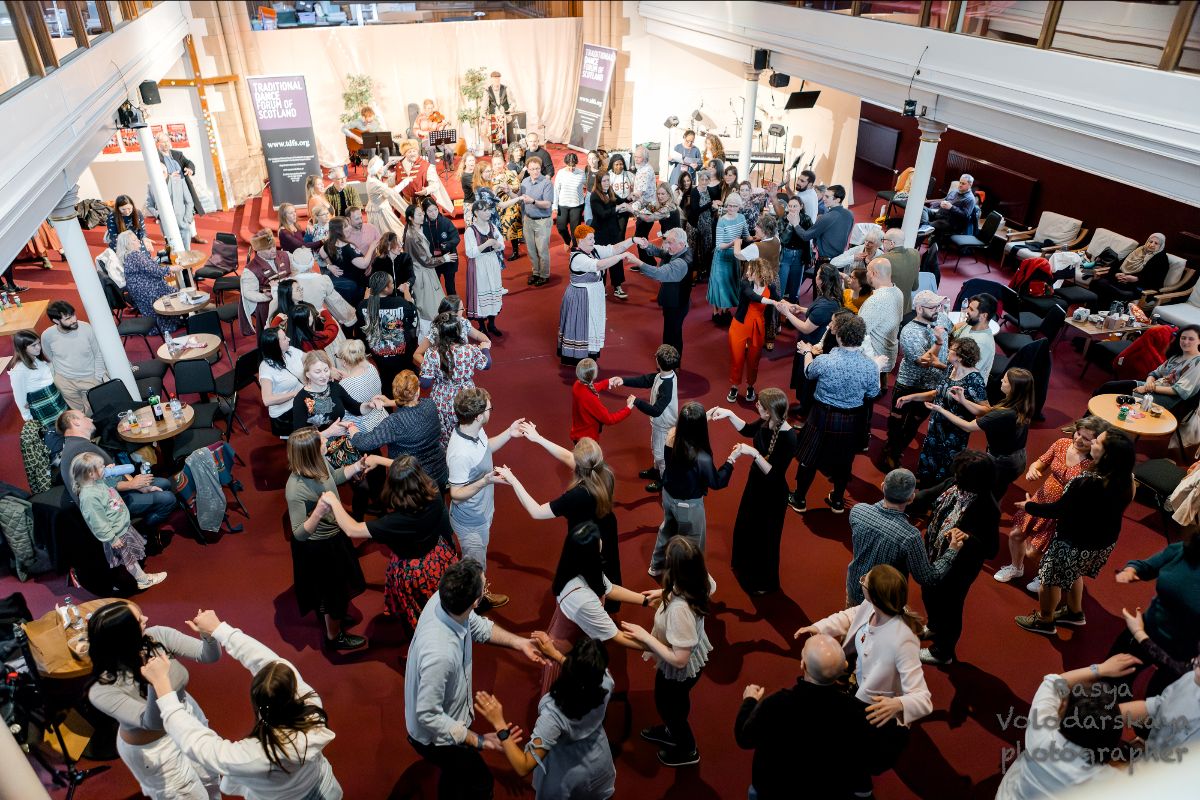
Hosted by the Traditional Dance Forum of Scotland and curated as part of the Pomegranates Festival 2025, this special edition of Ceilidh Plus featured much-loved Scottish Ceilidh dances, alongside trad dances recently inscribed in the UNESCO Representative List of Intangible Cultural Heritage of Humanity – Poland’s Polonaise and Hungary’s Csardas. Over 150 revellers enjoyed learning the Polonaise dances led by Violetta Skretowska, the founder and costume designer of Glasgow’s Sikorski Polonez Dance Group. The Hungarian dance master Árpád Vörös and mother/daughter duo Kriszti and Zsuzsi Szabo kept everyone dancing to the intoxicating Csardas rhythms and tunes.
Browse through this interview (in Polish) with Iliyana Nedkova about our first Polish Ceilidh Plus. Magdalena Grzymkowska-Chuchra published in the UK’s Polish community portal MyPolska.uk.
Find out more about the origins of Ceilidh Plus in this interview by the Edinburgh Inquirer.